 Österreich
 EU
EU

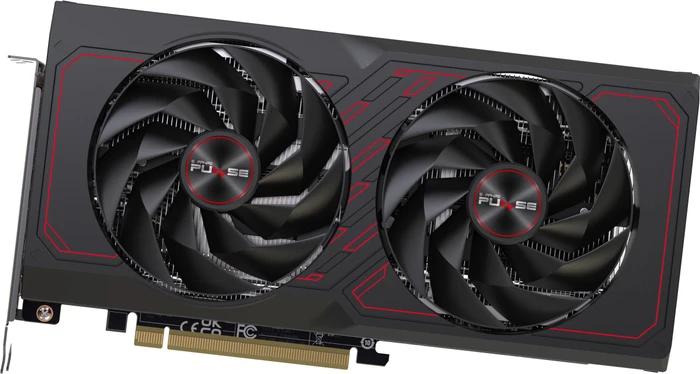
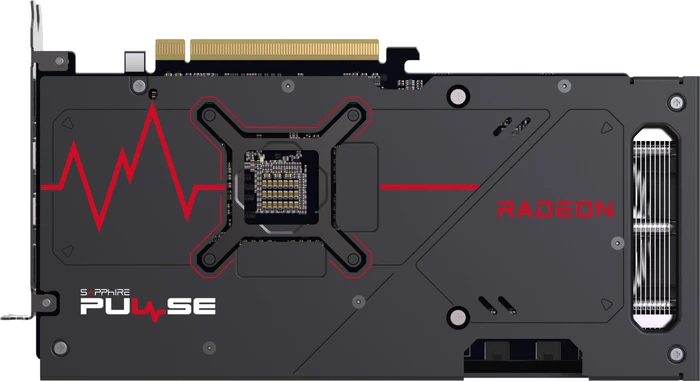
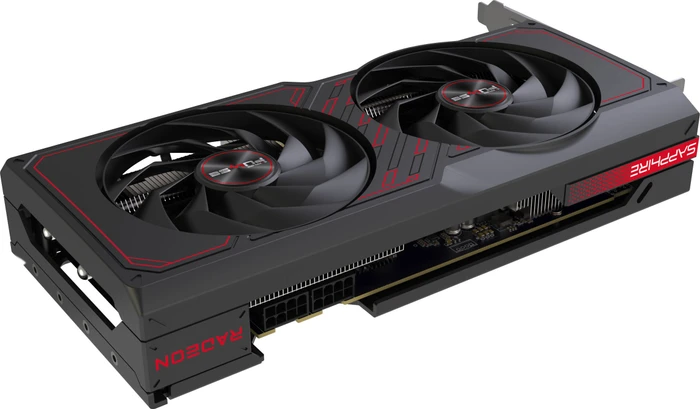
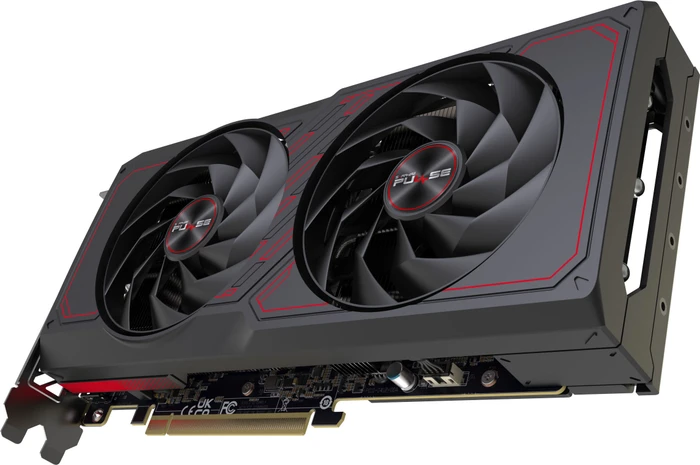
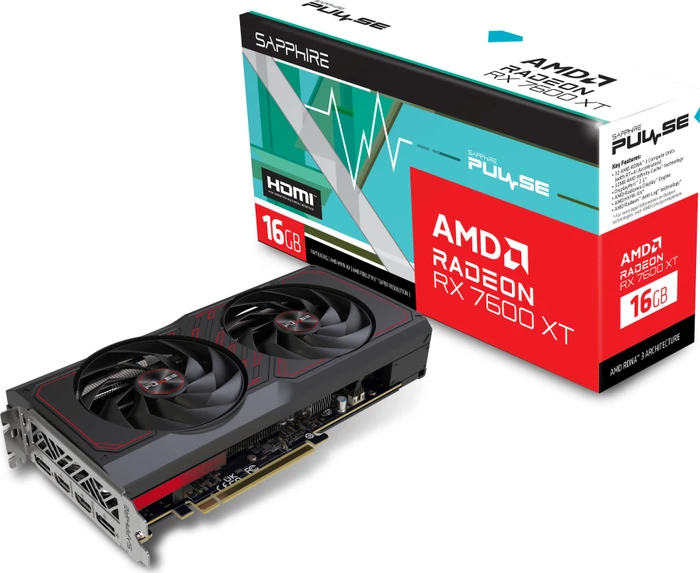
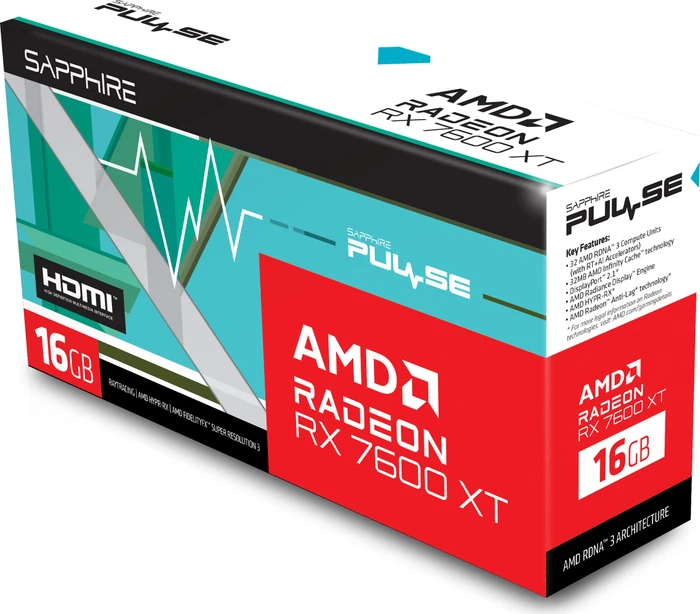


Sapphire Pulse Radeon RX 7600 XT OC, 16GB GDDR6, 2x HDMI, 2x DP, lite retail
- Modell
- AMD Radeon RX 7600 XT
- Speicher
- 16GB GDDR6, 128bit, 18Gbps, 2250MHz, 288GB/s
- Takt Basis
- 1720MHz
- Takt Boost
- 2355-2755MHz
- Übertaktung
- -
- Kühlung
- 2x Axial-Lüfter (90mm)
- TDP/TGP
- 190W (AMD), max. 192W (Sapphire)
- Stromanschlüsse
- 2x 8-Pin PCIe
- Anschlüsse
- 2x HDMI 2.1, 2x DisplayPort 2.1 UHBR13.5
- Anbindung
- PCIe 4.0 x16 (x8)
- Besonderheiten
- Backplate
- Gesamthöhe
- Triple Slot (2.2 Slots)




(Preis kann jetzt höher sein!)
- Modell
- AMD Radeon RX 7600 XT
- Speicher
- 16GB GDDR6, 128bit, 18Gbps, 2250MHz, 288GB/s
- Takt Basis
- 1720MHz
- Takt Boost
- 2355-2755MHz
- Übertaktung
- -
- Kühlung
- 2x Axial-Lüfter (90mm)
- TDP/TGP
- 190W (AMD), max. 192W (Sapphire)
- Stromanschlüsse
- 2x 8-Pin PCIe
- Anschlüsse
- 2x HDMI 2.1, 2x DisplayPort 2.1 UHBR13.5
- Anbindung
- PCIe 4.0 x16 (x8)
- Besonderheiten
- Backplate
- Gesamthöhe
- Triple Slot (2.2 Slots)
- Abmessungen
- 250x129.25x44.56mm (LxBxH)
- Bauform
- PCIe-Karte (full height)
- Slotblende
- full height
- GPU-Rechenleistung
- 45.88 TFLOPS (FP16), 22.94 TFLOPS (FP32), 0.72 TFLOPS (FP64)
- Chip-Daten
- Chip-Architektur
- AMD RDNA 3 (ab 2022/Q4)
- Chip-Bezeichnung
- Navi 33 (Navi 33 XT)
- Chip-Ausbau
- Vollausbau (32/32 CU)
- Chip-Konfiguration
- 32CU (2048SP/128TMU/64ROP), 32 RT-Cores, 2MiB L2-Cache
- Chip-Fertigung
- TSMC 6nm (6nm)
- Chip-Größe
- 204mm², monolithisch, 13.3 Mrd. Transistoren
- Chip-Funktionen
- Raytracing, AMD Infinity Cache (32MiB), HDCP 2.3
- Chip-Verwendung
- Radeon RX 7600 XT
Radeon RX 7600
Radeon RX 7400
Radeon PRO W7600
Radeon PRO W7500 - API-Unterstützung
- DirectX 12 Ultimate (12_2) / Vulkan 1.3 / OpenCL 2.2 / OpenGL 4.6 / Shader Model 6.7
- Encoding
- AV1, H.265, H.264
- Decoding
- AV1, H.265, H.264, VP9
- Multi-GPU-Anbindung
- -
- Veröffentlichung (Serie)
- 08.01.2024, UVP: 329 USD (AMD)
- Grafik
- AMD Radeon RX 7600 XT - 16GB GDDR6 - Desktop
- Letztes Preisupdate
- Gelistet seit
- 24.01.2024, 15:35
Bewertung für Sapphire Pulse Radeon RX 7600 XT OC, 16GB GDDR6, 2x HDMI, 2x DP, lite retail
Teilen Sie uns Ihre Meinung zu Sapphire Pulse Radeon RX 7600 XT OC, 16GB GDDR6, 2x HDMI, 2x DP, lite retail mit oder lesen Sie die Bewertungen unserer Mitglieder, Experten und anderer Websites zu dessen Varianten.-
 thinkcomputers.org: Sapphire Radeon RX 7600 XT Pulse Graphics Card Review (translate)Originalwertung: 8/10
AMD will not be offering a reference card for the Radeon RX 7600 XT, so we have Sapphire's Radeon RX 7600 XT Pulse card. This card offers a factory overclock with the game clock set at 2539 MHz and boost clock at 2810 MHz. Will this be a card to pick up in 2024? Read on as we find out!
-
tweaktown.com: Sapphire PULSE AMD Radeon RX 7600 XT Review (translate)Originalwertung: 83/100
16GB of VRAM in a mainstream GPU is not something you see every day, and when coupled with a modest overall boost to performance, the Radeon RX 7600 XT is an interesting, forward-thinking, but not earth-shattering release.
-
kitguru.net: AMD RX 7600 XT Review ft. Sapphire (translate)Originalwertung: 8/10
2024 feels like it's only just begun and we're already onto our third GPU launch in as many weeks. This time it's AMD's turn in the spotlight, as we put the recently announced RX 7600 XT through its paces. This graphics card is all about the VRAM, offering a 16GB framebuffer at a £310/$329 asking price. Today we find out what sort of performance is on offer, and whether or not it's worth paying extra for over the vanilla RX 7600.

-
 allround-pc.com: AMD Radeon RX 7600 XT im Test: WQHD-Gaming für unter 400 Euro?
Die Sapphire Pulse AMD Radeon RX 7600 XT Gaming OC liefert eine gute Leistung für Gamer, die nicht ihr Bankkonto sprengen und hauptsächlich in Full-HD mit Ultra-Einstellungen spielen wollen. Das Custom-Modell von Sapphire punktet mit einer guten Temperatur und einer wertigen Verarbeitung ohne RGB-Blingbling.

-
nikktech.com: SAPPHIRE Pulse AMD Radeon RX 7600 XT 16GB OC Graphics Card Review (translate)
Almost 4 months have gone by since AMD unveiled their Radeon RX 7600 XT graphics card and well, now is probably the best time to review this card (mature drivers by now). So how does it do, especially compared to the non-XT version? Well, it’s clear from the charts that what makes the most difference in many of the games is the amount of VRAM something which was to be expected since 8GB was a rather small amount to begin with. Yes, the extra boost on clocks also does help but not enough for the Radeon RX 7600 XT to compete with the likes of the GeForce RTX 4070. Now I don’t have an RTX 4060 in my charts yet and this was the model the RX 7600 XT was meant to compete with, but I imagine they’d be trading blows if I did. Consuming up to 207W on load is probably the sole downside of the RX 7600 XT, especially since that number is higher than even the RTX 4070. Yes, I don’t expect it to be a game breaker for consumers, even less for people who prefer Radeon cards, but it is what it is. Finally, in regards to cooling and noise levels SAPPHIRE has done a rather good job in both, especially when compared to the 7600 model.

-
lanoc.org: Sapphire Pulse RX 7600 XT OC (translate)
I’ve been a big fan of what Sapphire has been doing with their Pulse cards all across their lineup. They have hit the sweet spot where they aren’t putting out a low-quality card, the Pulse RX 7600 XT OC has a full coverage metal backplate and an overclock. But they have skipped out on a lot of the “gamer” focused stuff that might be flashy but also starts to run the pricing up like lighting. In its place, the Pulse RX 7600 XT OC has a simple clean cooler design with some red accents on the front and back and there isn’t too much for branding. They also bridge that gap in card size with a design that I wouldn’t call compact it is taller and longer than cards in this range used to be but it ends up being more compact than the XFX Qick RX 7600 XT that I took a look at and other than in some SFF situations the Pulse RX 7600 XT OC isn’t going to have any fitment issues. Sapphire has also gone with a few features that are a good fit with the targeted audience like an extra HDMI port and still having PCIe power plugs (not that any of the AMD cards are doing differently). The RX 7600 XT offers twice the VRAM as the original RX 7600, but beyond that, it is otherwise just a higher-clocked card. So when getting into testing we do see the Pulse RX 7600 XT OC run right in the middle of the overclocked RX 7600s in a lot of tests and even though it has the same clock speed as the XFX card the XFX averaged higher across the board. This being an overclocked version of an upclocked card really hurt things when it came to power efficiency which the AMD cards already struggle with. In the Pulse RX 7600 XT OC specific tests its smaller cooler did have to work harder and was a little noisier under load and at 50% fan speed but surprisingly at 100% fan speed it was near the bottom of our charts. It did really well in all of the 1080p testing, and was capable of gaming at 1440p in a lot of situations, especially with its larger VRAM. That includes outperforming the RTX 4060 in just about every test but like I said before it was also right with the RX 7600 in a lot of tests sitting around 5 FPS higher at 1080p. In the end, the RX 7600 XT is designed for users who like the RX 7600 but want more VRAM. While you also get a bump in performance from the clock speeds as well that additional VRAM only helps in some situations, especially at the 1080p resolution that the RX 7600 XT is most likely to be played at. So I still recommend the RX 7600 for a majority of people but the 7600 XT is a nice option for those looking for more VRAM. As for the Pulse RX 7600 XT OC specifically, I once again like the card design but the other cards tested did put up a big fight against it in the same price range where with the original RX 7600 the Pulse was the value card to get.
-
eteknix.com: Sapphire Pulse RX 7600 XT OC Graphics Card Review (translate)
Generally, when I look at GPUs, there’s a silver lining to it all, but I’m really struggling on this one, but that’s been the case on the last few launches from both AMD and NVIDIA, and I think it shows just how out of touch they are with consumers, which is a shame, as AMD has always been quite community driven and focussed on offering great value for money, which is the case on the desktop CPU division, but GPUs have just fallen by the wayside and that’s an opportunity for someone to scoop up, so it wouldn’t surprise me if Intel come in even stronger when their new products release. There’s a market available to them, and I honestly feel like AMD and NVIDIA have tried, and to a degree, they’ve both failed, so why not give the essentially, new guy a chance? It’s a shame, and while AMD can have the bragging rights to a degree, with Intel to one side, of having the cheapest 16GB GPU out right now, that’s where it starts and ends. The A770 is the cheaper 16GB card, but they just don’t have the same momentum that Team Green and Team Red have, and that’s why I’m cautious about saying that it’s comparable.
-
techpowerup.com: Sapphire Radeon RX 7600 XT Pulse Review (translate)
The Radeon RX 7600 XT is an effort by AMD to compete with the RTX 4060 within its price range, while also appealing to the creator and AI acceleration crowd. It is based on the same 6 nm Navi 33 monolithic silicon driving the RX 7600 from last year, and the RDNA3 graphics architecture. If you recall, AMD had used up all shaders available on the Navi 33 to create the RX 7600, leaving us to wonder how it would go about creating the RX 7600 XT. The expensive way to do it would be trying to heavily cut down the Navi 32 silicon, but that is a particularly expensive chiplet-based GPU that we doubt AMD could profitably sell under $300 or engage in a price-war with, against NVIDIA's frugal AD107 silicon driving the RTX 4060.

- Serienübergreifende Testberichte
-
tomshardware.com: AMD Radeon RX 7600 XT review: double the memory and higher clocks, still Navi 33 (translate)Originalwertung: 3/5
The AMD Radeon RX 7600 XT provides plenty of memory capacity, but that only improves performance in select workloads like AI, and the price increase ultimately pushes the card into competition with a higher tier of hardware. It's a good fit if you really need the VRAM, though it's mostly a sidestep from the pervious generation RX 6700 XT.
-
-
-
-
-
-
-


Alle Angaben ohne Gewähr. Die gelisteten Angebote sind keine verbindlichen Werbeaussagen der Anbieter.
* Preise in Euro inkl. MwSt. zzgl. Versandkosten. Bei der Auswahl von "inkl. Versand" beinhaltet der dargestellte Preis die Kosten für den Versand. Die nicht angeführten Kosten in andere Länder entnimm bitte der Website des Händlers. Bei Sortierung nach einer anderen als der Landeswährung des Händlers basiert die Währungsumrechnung auf einem von uns ermittelten Tageskurs, der womöglich nicht mit dem im Shop angegebenen Preis exakt übereinstimmt. Bitte bedenke außerdem, dass die angeführten Preise periodisch erzeugte Momentaufnahmen darstellen und technisch bedingt teilweise veraltet sein können. Insbesondere sind Preiserhöhungen zwischen dem Zeitpunkt der Preisübernahme durch uns und dem späteren Besuch dieser Website möglich. Händler haben keine Möglichkeit die Darstellung der Preise direkt zu beeinflussen und sofortige Änderungen auf unserer Seite zu veranlassen. Der maßgebliche Preis für den Verkauf durch den Händler ist der tatsächliche Preis des Produkts, der zum Zeitpunkt des Kaufs auf der Website des Händlers steht.